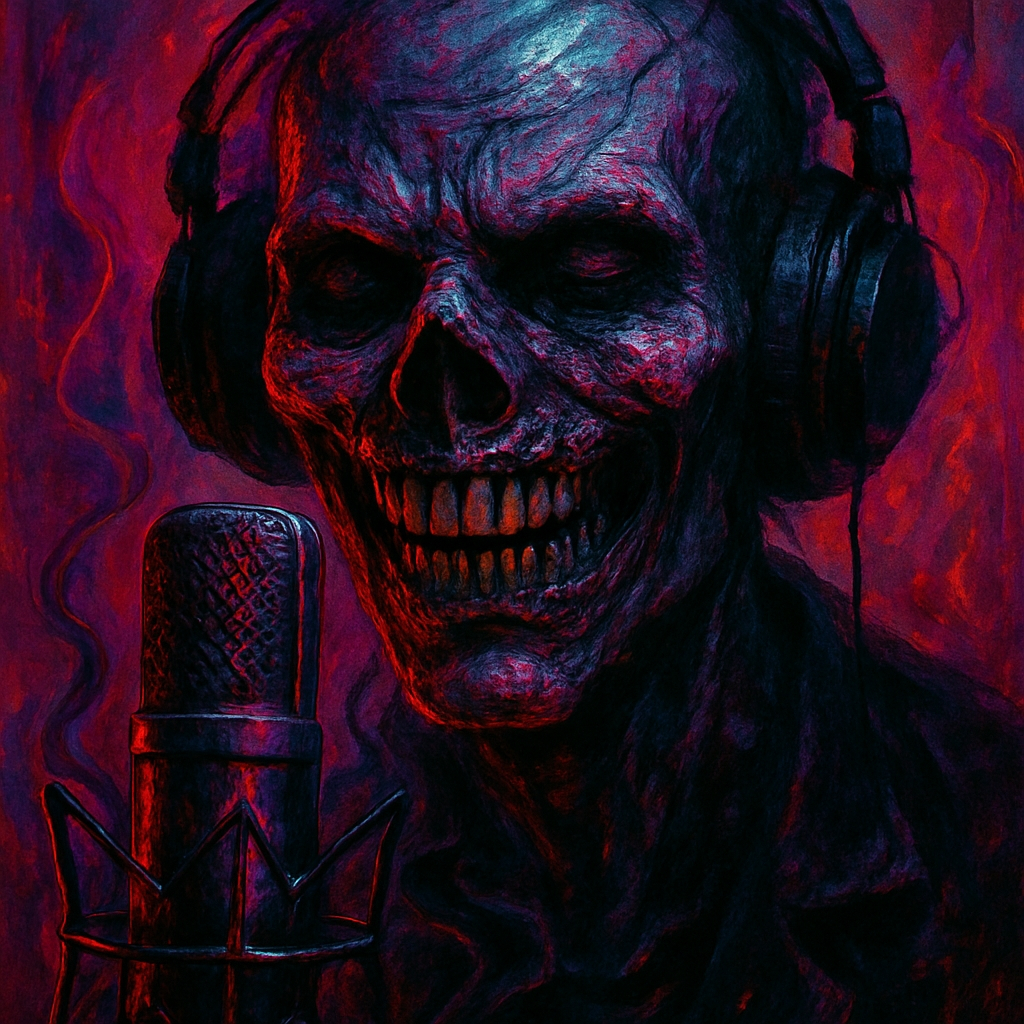

Narrating Fear and Sharpening Instincts
Living something—even if only in the mind’s eye—can leave a lasting imprint. That’s what I love about horror. It lingers. It teaches. It prepares.
The horror genre has a remarkable way of keeping us alert. It activates our survival instincts, nudging us to imagine the worst and consider how we’d respond. We’ve all shouted at the screen, warning the doomed character, or whispered to ourselves what we would’ve done differently. It’s instinctual to bank the mistakes of others for future reference, quietly increasing our odds of surviving the unimaginable.
From Dice Rolls to Dark Decisions
This mindset is just as present in tabletop role-playing games. My journey into horror narration began with storytelling through the “satanic ritual” of Dungeons & Dragons. It started innocently enough, but no matter how hard I tried to keep things wholesome, the scenarios always spiraled into terrifying survival.
Discovering retro TTRPGs like Trauma and Little Fears only fueled the fire. I loved watching players squirm—whether they escaped through brute force, clever thinking, or sheer luck, the dice always had the final say. It was a perfect storm for evoking emotion and testing instinct.
There’s something uniquely satisfying about watching someone face their fear in a fictional setting. You learn a lot about people when they’re cornered—even if it’s just imaginary. Some bluff. Some freeze. Some fight. And some surprise you entirely. That unpredictability is what makes horror such a powerful tool for exploring the human psyche.
Imagination as Survival Training
In my view, omitting physical imagery is essential when honing natural instincts. When we’re not spoon-fed visuals, our minds work harder—exploring countless outcomes, adapting to abstract threats. The more surreal the scenario, the more flexible our thinking becomes. Horror without visuals is a mental bootcamp.
It’s why I love audio horror. The absence of visual cues forces listeners to fill in the blanks with their own fears. A creaking door, a breath in the silence, a voice that doesn’t belong—these elements become infinitely more terrifying when imagined. And that’s where survival instincts kick in. You’re not just listening. You’re living it.
Bringing together all the elements to craft an immersive horror experience through audio alone is an incredibly gratifying process. In fact, I often find myself enjoying the editing phase even more than the narrations themselves. There’s something deeply satisfying about layering in the ambience of a dark, windy night as tense music swells quietly in the background. The subtle crunch of leaves underfoot, the snap of a twig echoing through the void — these small touches surround the listener as the unsuspecting victim draws ever closer to their encounter with death… or something far worse.
Then there are the eerie sounds of civilization — the low hum of flickering fluorescent lights, the distant drip of water, the sharp rhythm of footsteps tapping through empty corridors — as an urban explorer ventures deeper into a place they absolutely should not be. Each sound adds weight and tension, immersing the listener in a world they can’t see but can almost feel breathing down their neck.
It’s time well spent, meticulously adding these details to set the tone. Yet, sometimes the most effective choice is restraint. As I’ve mentioned before, less can often be far more powerful. A single, low drone or a warped, off-key hum can be enough to make one’s teeth clench with unease. The absence of sound — or the careful placement of silence — invites the imagination to do what it does best. Just as when you read a chilling story alone in the dark, it’s the mind’s eye that fills in the shadows.
The Stories That Stuck
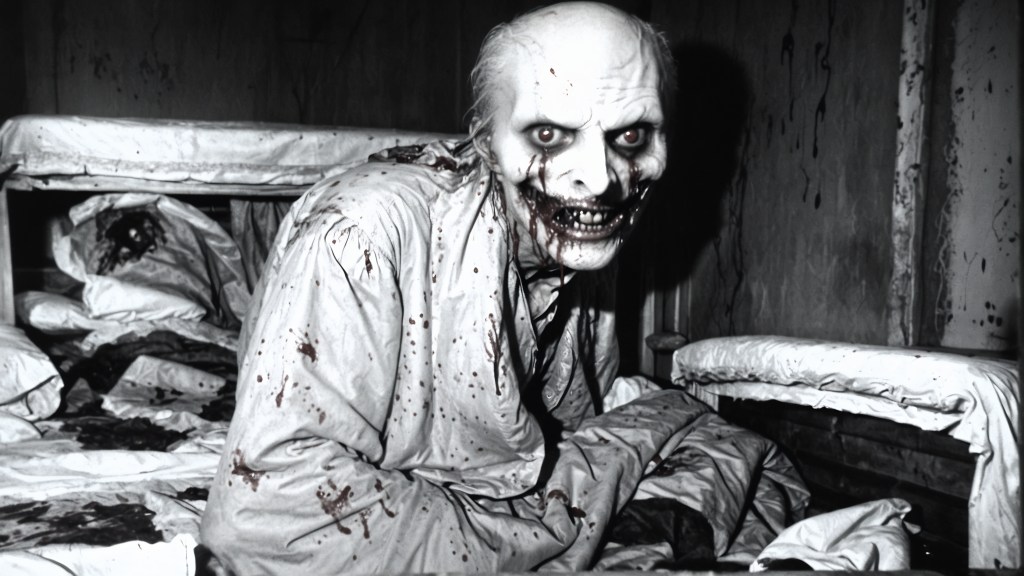
One of the first stories I narrated for my channel Visceral Imagination was “The Russian Sleep Experiment”. It was the first creepypasta I ever read, and it still haunts me. The idea that a twisted experiment could unleash a dormant, monstrous side of ourselves—it struck a nerve. It made me question reality, and whether sleep is truly a safe haven.
What would I do as a test subject? How long before my subconscious turned on me? Could I witness someone unraveling like that—and survive the encounter?
These questions are why I love horror. I want to evoke fear through narration, to stir the instincts that keep us enduring. To make listeners feel more alive than ever—without actually facing a machete-wielding maniac, of course.
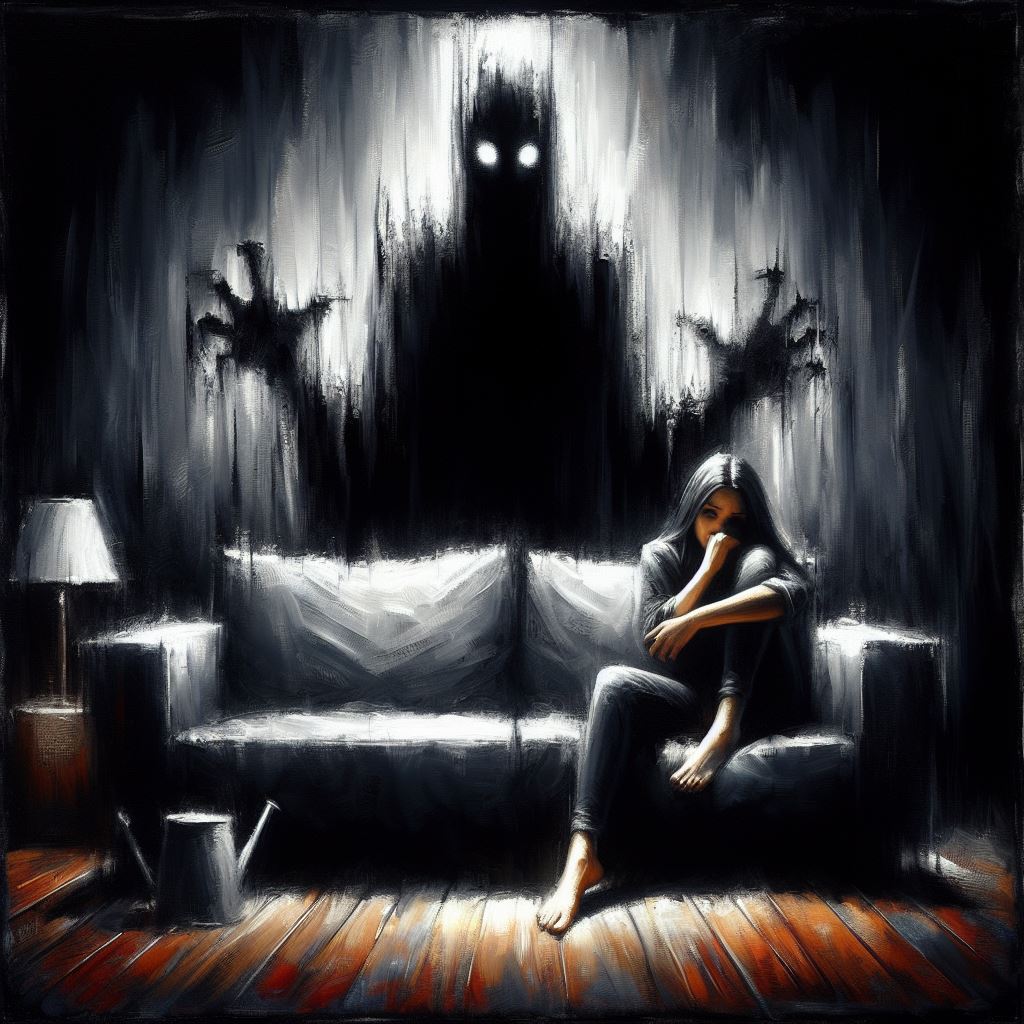
Another story I urge you to check out is “The Shadow” by Andrea Merchak, featured on my channel. It imagines a world where shadows themselves are lethal, and society must adapt to survive. Any cast shadow could mean death.
Could you mentally endure that reality—always ensuring you’re bathed in light or swallowed by darkness? What would be the moment you slipped up? It only takes one.
This story stuck with me because it’s not just about fear—it’s about discipline. Constant vigilance. The kind of mental strain that wears you down until you make a mistake. That’s the kind of horror that lingers long after the story ends.
Personally, I gravitate toward paranormal horror over slashers or real-life terror. If I want to fear humanity, I can turn on the news. But ghosts, entities, and the unexplained? That’s where my curiosity thrives. Stories with no resolution—just eerie echoes of what might have happened—leave me wanting more.

One story that comes to mind is one I narrated for another channel and site called Nightscribe. It was titled “The Doctor”, and it featured just the kind of ending that lingers with you. The tale recounts multiple encounters with a persistent spirit — a presence never banished, merely acknowledged and quietly endured. This ghost, bound to the halls of the old hospital where it once worked for years, continues its rounds in a strange, almost benevolent way… yet the unease it brings is undeniable. There’s something deeply unsettling about a ghost that means well.
What would you do if the full-bodied apparition of a long-dead doctor appeared at your bedside… just to check in?
Me, I have never seen a ghost, so I still find fun in wondering. Would I freeze in fear, or try to communicate? Maybe one day I’ll find out. Until then, I’ll keep preparing my mind through storytelling, collaborating with like-minded authors, and maybe—just maybe—desensitizing myself enough to stand my ground when the moment comes.
Unless, of course, the situation calls for running.
Embrace Your Fear
Horror isn’t just entertainment. It’s rehearsal. It’s reflection. It’s a mirror held up to our deepest fears and our most primal instincts. As a narrator, I get to guide people through that experience—to help them confront the unknown, even if it’s just for a few minutes.
And in doing so, I confront my own fears too. Every story I tell is a step deeper into the dark. But with each step, I feel more prepared. More aware. More alive.
So, whether you’re a listener, a reader, or a fellow narrator—embrace the fear. Let it sharpen you. Let it teach you. Because in horror, survival isn’t just a theme. It’s the point.
I Invite You
If you have a project that needs a voice — one capable of bringing your darkest visions to life — I invite you to get in touch. Whether you’re preparing to publish an audiobook, crafting a chilling narrative, or simply have a story you’d like featured on the channel, I’d be thrilled to hear from you… perhaps even to death.
You can explore more of my work by visiting my website, Vocal Point, or dive straight into the horror by checking out my personal YouTube channel, Visceral Imagination or the additional channel I narrate for NIghtscribe. Links are listed below — don’t be shy. After all, the shadows are always listening.
Links:
Visceral Imagination: Visceral Imagination – YouTube
Nightscribe: Nightscribe – YouTube
Nightscribe Website: Nightscribe – Scary Stories, Creepypasta, Horror & Dark Fiction
Vocal Point Website: Vocal Point Audio
 Threads that Bind
5 responses to “Speakable Horror”
First a shout out: This is the inaugural post of our newest contributor, and it sets a high bar indeed! Welcome to the fold, and we’ll be looking forward to many more tales from the inner world in the weeks to come.
Now, I watched your Russian Sleep Experiment video, I want to say years ago. Had no idea who was behind it, in fact, I went in thinking it was a documentary. By the halfway point I was saying, “This can’t be real!” I departed with a feeling of “maybe…” vying for credibility at the back of my head, and the fact that I instantly recognized that picture and remember the visceral gut-punch of the whole video even after years speaks volumes about your narration skills. Welcome to the web, my friend. Your depraved imagination will fit right in around here!
LikeLiked by 3 people
Wow, besides being a brilliant narrator, you can also write 😉 You’re right, some stories simply stick with us forever. Thanks for mentioning my story ‘The Shadow,’ your narration was amazing and added a lot to my story, and I still remember ‘The Russian Sleep Experiment.’ I can’t wait to hear more about this other art form, which brings so much to make our horror stories even scarier.
LikeLiked by 3 people
Outstanding post, dude! I listened to your audio rendition of Andrea’s ‘The Shadow’, and I can attest that it was impressive as well.
LikeLiked by 3 people
I became a fan of your YT channel through Andrea’s wonderful, frightening tale. Visceral Imagination is such a great horror locale, and I see we both got our start in TTRPGs. An excellent first write up, good sir.
LikeLiked by 2 people
Thank you everyone! Im so happy you enjoyed it. It’s definitely inspiring to be feeding my creative side with you all. I look forward to the next one 😀
LikeLiked by 1 person