Welcome back to my series on the influencers of my writing style. The second face on my personal Mount Rushmore of mentors is John Frederick Lange Jr., or to use his more familiar pen name, John Norman. As well as being a writer, Norman was also a professor of philosophy with a particular focus on Nietzsche, which in all honesty answers a lot of questions. Regarding my title, I have never met or talked with Mr. Norman and have no idea how he felt personally about women, but his later works paint a less than pretty picture. He is a complicated study with many facets to his work and perceived character, so try to follow along.

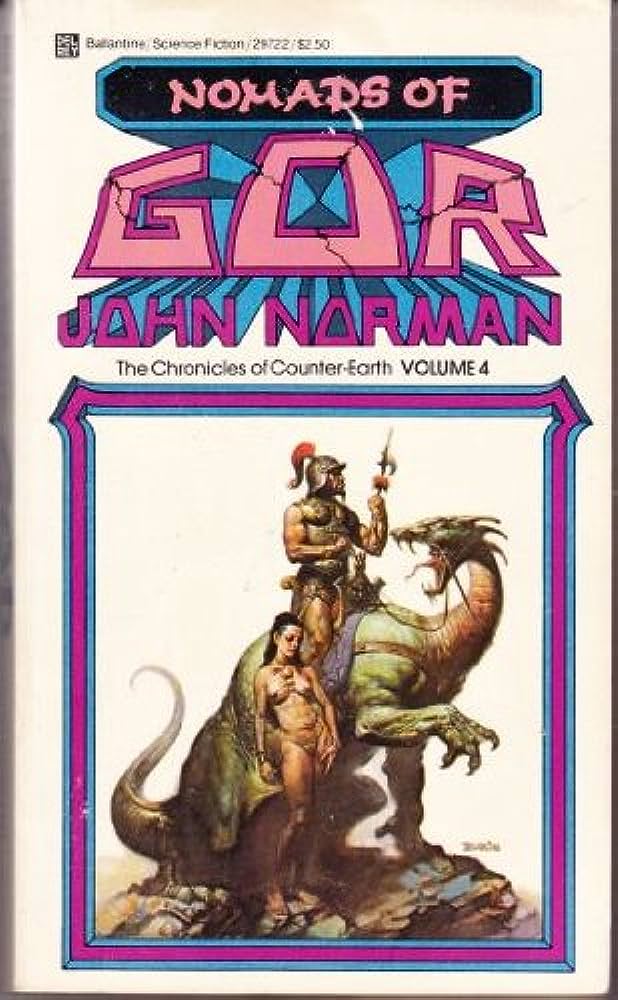
I first encountered Norman’s Gorean Saga in ‘71 or ‘72 when my mother picked up Book 4, Nomads of Gor, at a garage sale. Nomads chronicled the continuing adventures of a warrior named Tarl Cabot, an Earth-man who had been abducted to Gor, the “counter-Earth,” a planet sharing Earth’s orbit which was forever hidden on the far side of the sun. Brought to Gor by his father whom Tarl had assumed had deserted his family, he is trained as a warrior and soon becomes a player in the political games between Gor’s warlike city-states.
Book 4 was a romp that I thoroughly enjoyed, as it introduced as the main supporting character Kamchak of the Tuchuks, a warrior of one of the four nomadic tribes that resemble Earth’s Mongols. Counterpoised against the dour Tarl, Kamchak is a drinking, wenching back-slapper who will bet on anything, including the color of the next flower they see, or which way a bird will fly. I’ve often wished the series was about him rather than Tarl; I might have stayed longer.
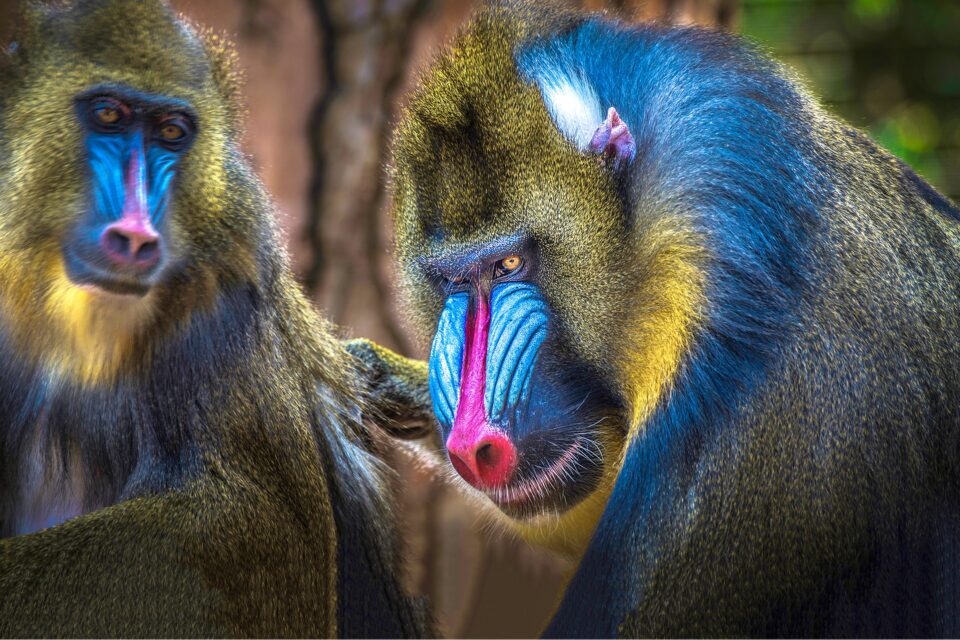
Many interesting characters and concepts are introduced, including Vella (Elizabeth Cardwell), a secretary abducted from Earth to deliver a message; Dina of Turia, another slave girl who excels at evading capture in a game in which she is given a head start then tries to avoid mounted warriors who attempt to lasso her on the run. Harold of the Tuchuks, the nerd of the tribe, earns his Courage Scar by playing a vital role in the capture of the city of Turia. The nomadic warriors decorate their faces with colored scars, pigment worked into cuts that form a permanent record of their martial achievements in the manner of modern-day medals. This custom gives the toughest among them the look of mandrills and Tarl, on first meeting, questions whether they are even human. The Courage Scar, a red bar below the left eye, is always first, and indeed no other scar can be awarded before it.
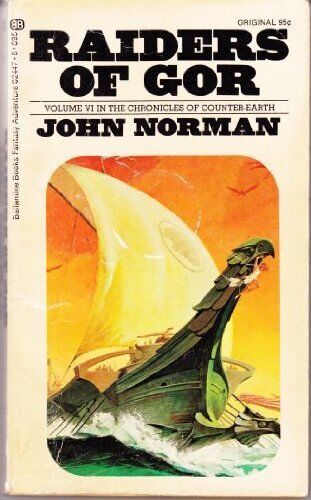
It isn’t my purpose here to give a complete recap, but rather set the mood. Having read Book 4, I set out on a quest to my local bookseller in search of the rest of them, and soon had 1-5 in hand. I was blown away, and picked up Book 6 soon after. These books are science fiction, but read like epic fantasy. Fans of the John Carter novels of Edgar Rice Burroughs would be right at home in this world. The case on Gor is that the planet has been placed in its orbit by a vastly superior race known to Goreans as the Priest-Kings, and serves as an arena where humans and other races contest without realizing it to save their respective worlds from conquest.
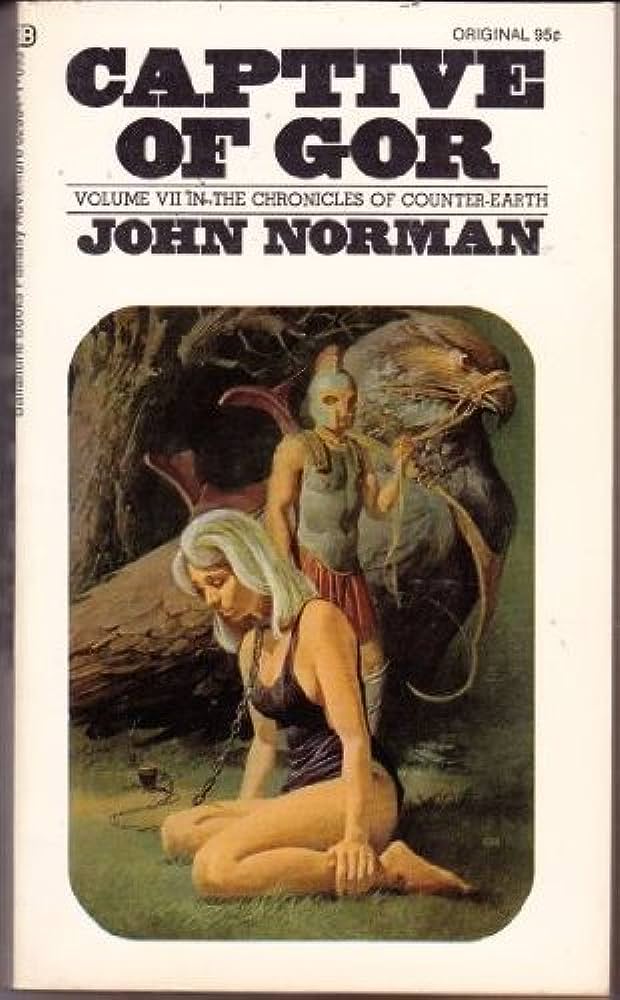
All right, not high on the list of great literature I’ll grant you, but entertaining escapism nonetheless, and I enjoyed them immensely. And then I acquired Book 7. Holy moly, what a change had been wrought! In the days before the internet, a reader knew very little about his favorite authors. Basically, whatever was in the press release, which never included anything remotely negative. So, my theory has always been that sometime after Book 6, which published in 1971, Mr. Norman had a run-in with one of the pioneer feminists, Betty Friedan or Germaine Greer, perhaps, because beginning in Book 7, his work became an anti-female screed with whole chapters devoted to lengthy discussions, some supposedly written by the female characters of the novels, of the “facts” that women are incapable of living full lives independently of men, can’t make reasonable decisions, and are not in fact happy unless they have a man telling them what to think and do. However that may be, it is stated as fact in the Wikipedia entry for Gor that he was blacklisted by publisher after publisher even as his series was at the height of its popularity, a situation he attributes to feminist influence.
This opinion of Norman’s may or may not have merit, but as you might imagine, as a man raised by independent women, this change in theme rubbed me up the wrong way. The first six books depicted a pre-modern society in which women played a secondary role, but that was the society, and as a reader, you accepted it. But this new look read more like philosophical textbooks from pre-Victorian times when women were expected to keep their mouths shut, cook and clean, and produce the husband’s heirs. As story points, I might have been able to accept this view of this fantasy world, but Norman would repeatedly “turn to the camera” so to speak, and deliver a lecture on the inferiority of all women everywhere. I struggled through Book 7 and started Book 8, but when I found it to be more of the same, I never went back to read any more of the 37 books in the series.
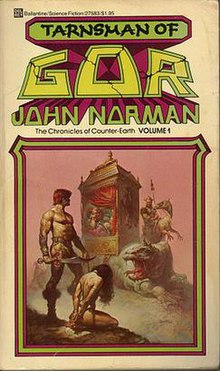
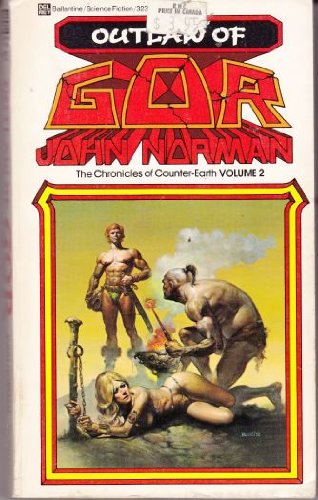
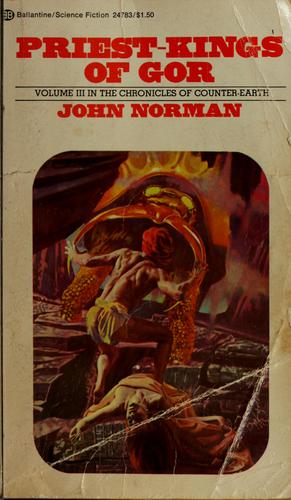
So, what could I have possibly learned from this ranting male chauvinist before I pulled the plug? Well, the first six books taught me that you can write a hell of a good fantasy novel without a hint of magic involved. There’s a name for the genre these days: Sword and Planet. I have written three fantasy novels, one of them published (available on my page above), and while I have never completely omitted magic, it plays a small role, and is wielded by very special characters indeed.
How about you? Have you ever learned a valuable lesson from a writer you considered less than savory? I’d love to hear about it. Leave your story in the comment section below, and let’s talk about it.
 Threads that Bind
3 responses to “The Misogynist”
The inner workings of a writer’s mind can be fascinating and illuminating when a writer chooses to share them; so thanks for doing that. I’d never heard of John Norman (was he related to Charlie Watts? Kind of resembles him). But I did enjoy the John Carter stories, and the Lensmen series by E.E. ‘Doc’ Smith in the ‘way way back’ – both of which I found inspiring at the time, but not to the extent of making me want to emulate them as a writer (which I didn’t even become until this century). That came much later, when I finally decided to dabble in horror & sci-fi under my Gerhard Dennis pen name; and it was yet another example of me not listening when people (including myself) told me I should pursue things that they thought I had an aptitude for (such as not pursuing a career in computer science until years after I was told I was good at math and would be good at programming). It must have been disappointing for you to have to cut Norman off after Book 6; but It’s good that you assimilated the lesson from Norman that you did, and not the misogyny.
LikeLike
Good evening, Garrett, and thanks for taking the time. When a young lad is raised by strong women, even a whiff of this malarkey sets off alarm bells that can be heard throughout the edifice. Gor remains the home of six damned fine stories, though, and yes, it was very disappointing to have to quit. Had I the maturity I developed later I would have quit after Book 7, Chapter 1, but I kept thinking he would return to form. Alas…
Of course, having grown up on fantasy from Snow White to Sauron, I “knew” that fantasy meant magic, and I’ll be forever grateful to Mr. Norman for straightening me out on that point.
He does kind of look like Charlie, doesn’t he? Anyway, thanks again for your thoughts. Read well, and write better!
LikeLike
[…] on August 11, 2023August 11, 2023 By negatrite! The Misogynist […]
LikeLike