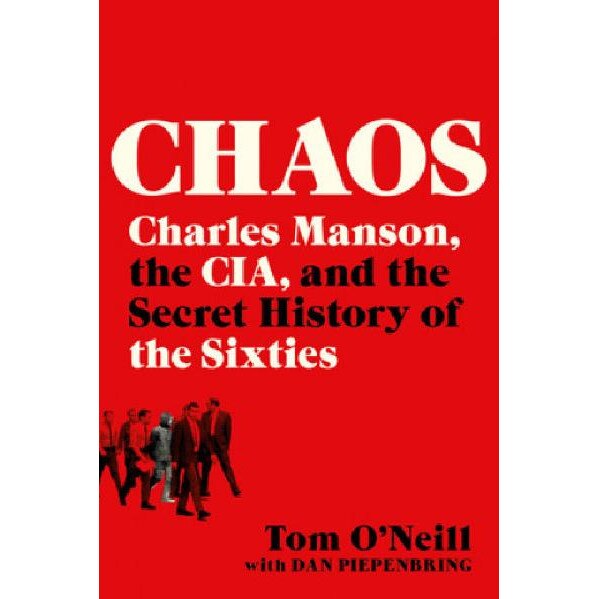
Last year I listened to the audiobook Chaos: Charles Manson, the CIA, And The Secret History Of The 60s. It had me hooked, because I can remember as a teen in the early 90s when Manson’s crazed face got put on black T-shirts and placed on serial killer trading cards. This is a true horror who seems to keep on going, but the entire affair of Manson and his followers always felt like a half put together puzzle to me. The book, by Tom O’Neill, adds an enormous amount of information, decades’ worth, pointing to the fact that Manson had connections in helping him and his ‘family’ commit their vile acts of drug abuse/dealing, prostitution, and murder.
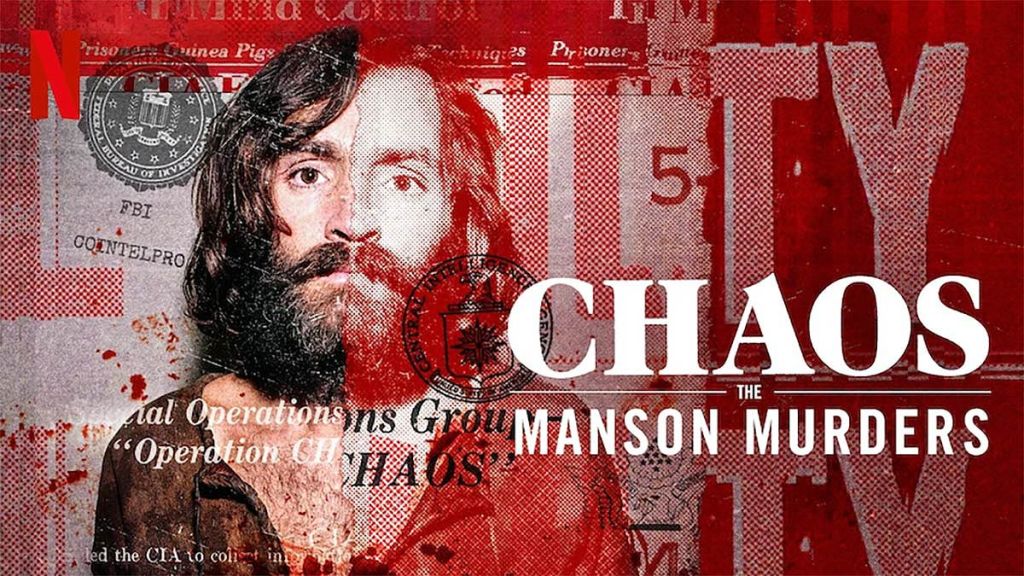
Saturday night, I found the book was now a documentary on Netflix (Chaos: The Manson Murders) and took to watching it. While I feel the doc tries to pinpoint O’Neill’s decades of work as sort of scattered and his research as flimsy as a UFO sighting (I disagree), it brought me to two thoughts about villainy: its legacies, and how it’s represented in fiction.
THE LEGACY OF A VILLAIN
Charles Manson fascinates people even in the 21st century not just because of the Chaos book, but because it’s hard to believe one man, one dingy, short, seemingly crazy guy, can implant deep seated mind control into others. Even when we remove the LSD, cocaine, the sex, the charisma and oral Bible he stitched together from Scriptures and Beatles albums (not to mention the young age of his cohorts/followers), it is hard to reconcile him having that much control in the two years he knew his ‘family’ members.
The book and doc use evidence which imply Manson knew the leading man testing LSD for the infamous MK:ULTRA CIA project, the one where spooks injected LSD into various persons in order to not just get them to be more submissive, but to alter their moral core and memories. This man worked in the clinic where Manson took his girls because via prostitution, they were often stricken with venereal diseases. From that day on, he is awash in a supply of LSD, is never without money, or guns. Though on probation, police arrest him and the ‘family’ several times between 1967 and 1969. Manson never loses parole or goes to jail.
I wouldn’t need Chaos to think something is wrong here, but it’s nice to have the documentation. Manson, a seeming nobody, had cop friends, parole officer pals, even a CIA acquaintance. Maybe this book is bogus or tries too hard. You watch it and decide. But I did spend many years of adulthood living in projects, high crime areas, and I learned through observation that the most successful drug dealers are friends (and snitches to) the police. They can get arrested dozens of times and be out the next day. I’ve seen it one time too many and it’s an eye opener, because too often, those are the guys who soon do even worse things.
Like murder. Manson kept getting away because they let him, and this swelled his already inhuman ego. Killing ‘enemies’ was next on the list of crimes. This allowed him to deepen his hold, spread his message, such as it was, and rise from petty goon to that forehead carved face that’s on shirts and enmeshed in the American public consciousness. Add to this a highly public trial, which focused so much film footage on what this guy had to say, an indirect form of increasing his image, and voila, Charles Manson is the later 20th century’s Adolf Hitler.
I wonder how many high level drug czars use LSD and other drugs for mind control and loyalty, how many pimps? This is very dark thinking for the short work week, but necessary for the public, and for writers. We should think about the horror in others on occasion, and how their actions spread like COVID when unchecked, because the farther and deeper it does, the more people get impacted, and the longer their deeds stretch out. A lengthening shadow of dread.
Speaking of Hitler, if there’s one legacy of evil (almost) everyone can get agree was just that, it’s this guy. But unlike a Manson, Hitler had a larger body of followers, but also pushed a racial ideology and some say he was on drugs. (I’m not trying to slander anyone who takes drugs. I’ve known a lot of people who did them who never hurt a fly, just acted weird, only bringing it up for comparison). The cops, such as they were at the time in Germany, got out of the Nazis’ way as they and the corporate sector fell to Adolf’s charismatic fervor and contract promises. Later on the little Mustache Man had political allies, then the microphone. Cult, police negligence (purposeful or incidental), high-level allies, then media. Gradations on the scale of epic villainy.
Legacy point we still have Nazis to this day, and drug addled cults.
Just a thought, and I never stand on some hill thinking my opinion here is the only one, or even accurate. None of these real life supervillains are stalled at any step along their ‘evolutionary path’. They get to keep going, influencing better and faster than even the internet, infecting minds, often young ones while older ones look elsewhere and hope the plague will die out quickly. But this form of villainy doesn’t soften or expire so long as the head breathes. It’s too committed, a zealot, and won’t rest while there are more people they can either subsume humiliate, or eliminate. In fact, they get just about all the help they could ever want.
THE LONE WOLF. . . IS NOT
Which brings me to the second thought the doc got my brain to pondering, set up much of what I wrote up above. In fiction, the villain is portrayed much like the hero, as a loner who has power, lackeys, infrastructure, and so on. On occasion this can be used to draw a comparison to the hero.
However, something’s missing. Whether it’s Doctor Doom or Moriarty, we are essentially given the villain in a vacuum. Fully formed, the height of power. But my mental dwellings on this during Chaos are that this is false. Villains can’t rise or even remain on course without a steady supply of materiel and support. Someone(s) feeding this person, and giving them access to resources and/or allowing for their base to ferment by not hitting them with the arm of the law.
In other words, there is no lone wolf villain. While a hero might have lost their parents and been brought up to feel/be different, thus standing outside society (and even this is untrue), the villain needs others to get away with crimes as well as power up over the course of time. They do not simply have henchmen. They require higher ranking agencies letting them do what they do. Narcissists feeding narcissists.
We are often down the road given a villain origin story, but this shows them very early in, young, just forming the foundation of what will make them bad. While they might commit a murder or even genocide, they still seem to do it all by themselves. This lacks how bad people get by, even long after they’ve walked the dark path.
A harder outlook on this is that while the hero maintains moral righteousness in action often in spite of a society that is subjugated, unwilling or even in favor of unethical communal behaviors, the villain needs society to be the way it is or they’ve got zilch to build from. I know, we’re all ‘born good’ and ‘society is just’. But also, it isn’t. Humans are messiness personified. For every shiny city clock there are two hellish ones. For every clean state there is a war-torn one. And even within those shining exemplars lie treacherous hierarchies, jealousies, egos, and so on that coerce, even encourage, villainous mentality. So the system itself, one way or another, influences and aids villains.
This is giving me new realms to ponder on writing my villains. I need to expand their circles, at the least.
What do you think?
 Threads that Bind
2 responses to “THINKING ABOUT VILLAINS”
You’ve definitely given me some food for thought. Villains need a support network and need to keep it. True, there are some bad guys who will go off and do a terrible thing, but their “reign of terror” tends to be pretty short lived once they’re stopped.
As it turns out, I just read Saving Grace, the last novel of infamous filmmaker Ed Wood. His villain reminded me a lot of Manson and he actually did explore how the villain used his charisma and his ability to terrorize by turns to hold his flock together. One word of warning, if you do seek out this novel it’s both very sexual and very violent. Even though it’s a short novel, it’s not a casual read.
LikeLiked by 1 person
An interesting observation, that villains need to be enabled in order to keep on succeeding at their nefarious activities. Something to keep in mind when trying to flesh out characters in our writings. As for Ed Wood, I didn’t know he also wrote books; might have to check that one out.
LikeLiked by 2 people